Health
The New Face Of Confidence Begins With Modern Smile Restoration

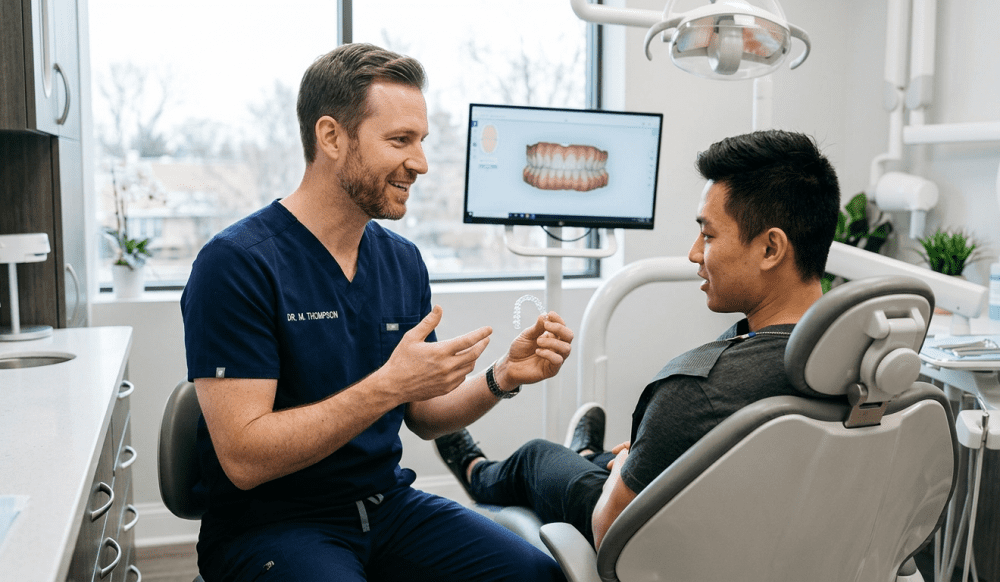
Confidence rarely disappears all at once. It tends to slip away in small habits: a closed-mouth smile in photos, a hand raised while laughing, a quiet decision to order food that is easy to chew. For many people, a single missing tooth is behind it. That is why modern smile restoration, and options such as Dental Implants Newcastle, attract so much interest.
The best way to understand how it works is to follow the journey from start to finish.
Stage One: Living With the Gap
A missing tooth affects people in different ways. A front tooth changes how a smile looks, and tooth loss is linked with effects on self-esteem. A back tooth may be hidden, yet it can still make chewing less comfortable. Front teeth also play a part in speech, so some people notice small changes in certain sounds.
There can be quieter effects too. Without a root to stimulate it, the jawbone beneath the gap can slowly shrink. Neighbouring teeth may tilt towards the space, and the tooth opposite can drift downwards. None of this happens equally in everyone, and some people cope well for years. But it explains why a gap is worth having checked rather than ignored.
Stage Two: Building the Plan
Modern restoration starts with information. A dentist reviews the person’s medical history, examines the teeth and gums, and takes X-rays. Where more detail is needed, a 3D CBCT scan shows the jawbone clearly, which helps decide where an implant could sit. Those exploring Dental Implants Newcastle will find that this planning stage comes well before any surgery.
This is also when suitability is decided. Dentists look at:
- Whether there is enough healthy jawbone
- The condition of the gums
- General health and medicines
- How well the person can keep up daily cleaning
Smoking, poorly controlled diabetes, past gum disease and teeth grinding are discussed openly. They are factors to weigh, not automatic refusals, and prescribed medicines should never be stopped without advice from the clinician who prescribed them.
Stage Three: The Rebuild Underneath
A single implant has three parts. The post is a small screw-like piece, usually titanium, placed in the jawbone as an artificial root. The abutment connects the post to the crown. The crown is the visible tooth.
The post is usually placed under local anaesthetic. Mild soreness, swelling and bruising are common afterwards, with swelling often peaking around 48 hours and easing over about a week. Then comes the slow part. The jawbone gradually bonds with the post in a process called osseointegration, which is what makes it stable. Healing commonly takes around three to six months, and longer if an extraction or bone graft is needed. Nobody can promise an exact timetable before an assessment.
Stage Four: The New Tooth
Once the implant has healed, the abutment is attached and a custom crown is fitted. The crown is made to match the colour, size and shape of the neighbouring teeth, which is why a well-planned result can blend in so naturally. Even so, the finish depends on the design, the materials and the surrounding teeth, and the implant remains an artificial device rather than a living tooth.
Stage Five: Keeping It Going
An implant cannot decay, but the gum and bone around it can still become inflamed. The tissue around an implant can also be more vulnerable to bacteria than natural gum tissue. Brushing twice a day, cleaning between the teeth and attending regular check-ups protect the result. Red or bleeding gums, worsening pain, pus, a bad taste or a loose crown should be reported to the dental team promptly.
Other Roads to the Same Goal
An implant is not the only way to close a gap, and confidence does not depend on one choice.
- A bridge is fixed and usually quicker, with no implant surgery, but it relies on the neighbouring teeth, which may need reshaping.
- A removable partial denture avoids surgery and is simpler, though it is generally less stable and has to be taken out for cleaning.
- An implant and crown is fixed and stands alone, but it needs surgery, enough bone and several months.
People comparing Dental Implants Newcastle with these alternatives should expect a balanced explanation of the drawbacks as well as the benefits.
Where Local Patients Can Begin
For patients in Newcastle and Gateshead, Denmark Street Dental Practice offers a free consultation to discuss options for replacing missing teeth. The practice uses X-rays and 3D CBCT scans to assess patients and plan implant treatment. It reports having placed more than 4,000 implants over 30 years, with its patient care process covering the initial consultation, assessment, treatment and ongoing maintenance. Further details about the practice and its services can be found on its website, denmarkstreetdentalpractice.co.uk.
These figures and details are provided by the practice, so patients should ask about the dentist’s experience, expected treatment times and aftercare before proceeding. Those researching Dental Implants Newcastle can also use the appointment to discuss other options, including bridges and dentures, and decide which treatment may suit their needs.
Summary
Real confidence does not come from a quick fix. It comes from understanding what is happening, choosing an option that suits the mouth, and looking after the result. A single implant can give a fixed, independent replacement for one tooth, and for many people a complete smile makes everyday moments easier. It also takes time and needs healthy foundations. For anyone considering Dental Implants Newcastle, a proper assessment is where the journey starts.
Key Takeaways
- A missing tooth can affect smile confidence, speech, chewing and jawbone health.
- Modern dental implants use a titanium post, an abutment and a custom-made crown to replace a missing tooth.
- X-rays and 3D CBCT scans help dentists assess the jawbone and plan treatment.
- Implant placement is usually performed under local anaesthetic, with mild soreness and swelling expected during recovery.
- Healing commonly takes three to six months, depending on individual circumstances.
- Custom crowns are designed to match the colour, size and shape of surrounding teeth.
- Dental implants need daily cleaning and regular check-ups to protect the surrounding gums and bone.
- Bridges and removable partial dentures are alternative ways to replace missing teeth.
- Anyone considering Dental Implants Newcastle should arrange a professional assessment to discuss suitability, treatment options and aftercare.


Why Americans Are Planning a New Life in Portugal

Who Is Rose Swisher? The Real Life Story of Bill Russell’s First Wife

Who Is Andrey Saminin? The Real Life Story of the Ukrainian Actor Married to Lesya Samaeva

Who Is Storm Brieanne Sixx? The Real Life Story of Nikki Sixx’s Daughter

Who Is Vera Davich? The Real Life Story of Scott Patterson’s First Wife

Who Is Elizabeth Hatcher Travis? The Real Life Story of Randy Travis’s Ex-Wife and Former Manager

Who Is Thomas Emil Sicks? The Inspiring Life of Kiefer Sutherland’s Half-Brother

Who Is Aidan Thieriot? The Inspiring Life of Max Thieriot’s Brother

Who Is Amelia Jane Henson? The Fascinating Life of Mia Sara and Brian Henson’s Daughter

Who Is Michel Sáenz Castro? The Fascinating Life of Verónica Castro’s Son

Who Is América Guinart? A Remarkable Life of Alejandro Fernández’s Ex-Wife

Who Is Paris Brosnan? The Remarkable Life of Pierce Brosnan’s Son
-
 Celebrity3 months ago
Who Is Thomas Emil Sicks? The Inspiring Life of Kiefer Sutherland’s Half-Brother
-
 Celebrity3 months ago
Who Is Aidan Thieriot? The Inspiring Life of Max Thieriot’s Brother
-
 Celebrity3 months ago
Who Is Amelia Jane Henson? The Fascinating Life of Mia Sara and Brian Henson’s Daughter
-
 Celebrity3 months ago
Who Is Michel Sáenz Castro? The Fascinating Life of Verónica Castro’s Son
-
 Celebrity3 months ago
Who Is América Guinart? A Remarkable Life of Alejandro Fernández’s Ex-Wife
-
 Celebrity3 months ago
Who Is Paris Brosnan? The Remarkable Life of Pierce Brosnan’s Son
-

 Celebrity3 months ago
Who Is Finn William Leeves Coben? The Remarkable Story of Jane Leeves’ Son
-

 Celebrity3 months ago
Who Is James Daniel Sundquist? The Extraordinary Life of Jimi Hendrix’s Son