Blog
Why Every High School Student Should Learn CPR Before Graduation

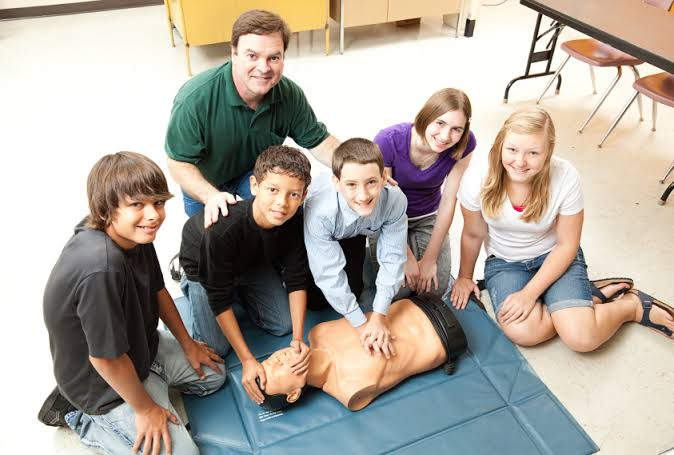
Equipping teenagers with emergency life-saving skills transforms anxious bystanders into capable first responders. Safety training builds confidence, drastically reduces emergency response times during cardiac events, and creates safer school environments. Discover why educators are pushing for hands-on safety education and how it positively impacts local communities.
We expect teenagers to learn complex calculus, pass their driving tests, and prepare for college. But what happens if the person sitting next to them in the cafeteria suddenly collapses? The truth is, most kids wouldn’t know where to start. I remember feeling completely helpless when a classmate fainted in middle school. That feeling of panic is exactly why the movement pushing for student CPR is gaining serious momentum across the country. We have a unique opportunity to turn helpless bystanders into active lifesavers.
Why Are Schools the Perfect Place for First Aid Training?
Schools are basically massive community hubs. You have hundreds, sometimes thousands, of people gathered in one place every single day.
Medical emergencies don’t wait for a convenient time. Sudden cardiac arrest can happen during a basketball game, a band rehearsal, or right in the middle of a math exam. When an emergency strikes, an ambulance can take anywhere from 8 to 12 minutes to arrive. Irreversible brain damage begins in just four to six minutes.
If students are trained, the response time drops to seconds.
● Immediate chest compressions: Kids can start pumping oxygenated blood to the brain instantly.
● Quick AED retrieval: Students know the school layout better than anyone and can grab the hallway defibrillator fast.
● Crowd control: Trained students naturally help clear the area and direct emergency services to the right door.
Can Teenagers Really Handle High-Stress Emergencies?
A lot of adults worry that teenagers will freeze up or panic when things get real. But studies actually show the exact opposite.
Teenagers are highly adaptable and absorb physical skills like sponges. Once they get over the initial awkwardness of pushing on a plastic dummy’s chest, muscle memory takes over. They learn the proper rhythm and depth very quickly. It gives them a profound sense of responsibility. They aren’t just kids anymore; they are capable members of the community who know how to protect their peers.
How Does Blended Learning Keep Students Engaged?
Let’s face it: getting teenagers to sit through a two-day lecture is tough. They get bored, and they tune out.
This is why modern training uses a blended learning model. Students complete the interactive, theoretical portion online at their own pace. They can watch videos, take quizzes, and learn the science behind cardiac arrest from their phones or laptops.
Then, they attend a short, high-energy, in-person session to actually practice the chest compressions and AED pad placement. It is efficient, fun, and respects their time. If you are looking for first aid training near the ICE District, Jasper Avenue, or other areas close to our downtown facility, then you may reach out to Coast2Coast First Aid/CPR – Edmonton in that area. For more info, course schedules, and articles like this, visit: https://www.c2cfirstaidaquatics.com/
Frequently Asked Questions
What is the minimum age to take a standard CPR certification course? There is no strict minimum age for most basic CPR and AED courses. Participants simply need the physical strength to push down on a chest at least two inches, and the maturity to understand the course material. Usually, students aged 12 and up do exceptionally well.
Are AEDs safe for teenagers to operate? Yes, modern Automated External Defibrillators are practically foolproof. Once turned on, the machine gives loud, step-by-step voice commands. It analyzes the patient’s heart and will physically not allow a shock to be delivered unless it detects a shockable rhythm.
Do students need to perform mouth-to-mouth resuscitation? Not necessarily. Many emergency protocols for sudden cardiac arrest now heavily emphasize Hands-Only CPR, especially for bystanders. If students do learn rescue breathing, they are taught to use a pocket mask or face shield for safety.
How long does a typical student certification last? A standard Canadian Red Cross First Aid and CPR certification remains valid for three years from the date of issue. Schools often run refresher courses annually to keep everyone’s muscle memory sharp.
Can a student get in legal trouble if they make a mistake during CPR? No. Good Samaritan laws exist specifically to protect people who step in to help during an emergency. As long as the student acts voluntarily, without expecting money, and avoids gross negligence, they are legally protected.


Who Is Jericka Duncan? The Real Life Story of the CBS Weekend News Anchor

Who Is Erin Trussell? The Real Life Story of Duncan Trussell’s Wife

Who Is Maggie Rose Stewart? The Real Life Story of Jon Stewart’s Daughter

Who Is Ben Ohai? The Real Life Story of Kealia Ohai’s Father

Who Is Yvette Deleone? The Real Life Story of Scottie Pippen’s Former Fiancee

Who Is Mallory Plotnik? The Real Life Story of Phil Wickham’s Wife

Who Is Thomas Emil Sicks? The Inspiring Life of Kiefer Sutherland’s Half-Brother

Who Is Aidan Thieriot? The Inspiring Life of Max Thieriot’s Brother

Who Is Amelia Jane Henson? The Fascinating Life of Mia Sara and Brian Henson’s Daughter

Who Is Michel Sáenz Castro? The Fascinating Life of Verónica Castro’s Son

Who Is América Guinart? A Remarkable Life of Alejandro Fernández’s Ex-Wife

Who Is Paris Brosnan? The Remarkable Life of Pierce Brosnan’s Son
-
 Celebrity3 months ago
Who Is Thomas Emil Sicks? The Inspiring Life of Kiefer Sutherland’s Half-Brother
-
 Celebrity3 months ago
Who Is Aidan Thieriot? The Inspiring Life of Max Thieriot’s Brother
-
 Celebrity3 months ago
Who Is Amelia Jane Henson? The Fascinating Life of Mia Sara and Brian Henson’s Daughter
-
 Celebrity3 months ago
Who Is Michel Sáenz Castro? The Fascinating Life of Verónica Castro’s Son
-
 Celebrity3 months ago
Who Is América Guinart? A Remarkable Life of Alejandro Fernández’s Ex-Wife
-
 Celebrity3 months ago
Who Is Paris Brosnan? The Remarkable Life of Pierce Brosnan’s Son
-

 Celebrity2 months ago
Who Is Finn William Leeves Coben? The Remarkable Story of Jane Leeves’ Son
-

 Celebrity3 months ago
Who Is James Daniel Sundquist? The Extraordinary Life of Jimi Hendrix’s Son