Business
Robotics and Automation: How Smart Machines Are Changing Industries

Introduction
Robotics and automation are changing how people work, manufacture products, and deliver services. Factories use robots to assemble products, hospitals use robotic systems to support medical procedures, and warehouses use automated machines to move goods.
These technologies help businesses perform tasks that may be repetitive, physically demanding, or difficult to complete with consistent accuracy. They can also help workers perform dangerous jobs with less exposure to risk.
Robotics and automation are closely connected, but they are not the same thing. Automation is the broader use of technology to perform tasks with less manual effort. Robotics focuses on machines that can carry out physical actions in the real world.
As sensors, software, artificial intelligence, and computing systems improve, robots are becoming more flexible. They can increasingly respond to changes in their surroundings instead of performing only one fixed movement.
What Is Robotics?
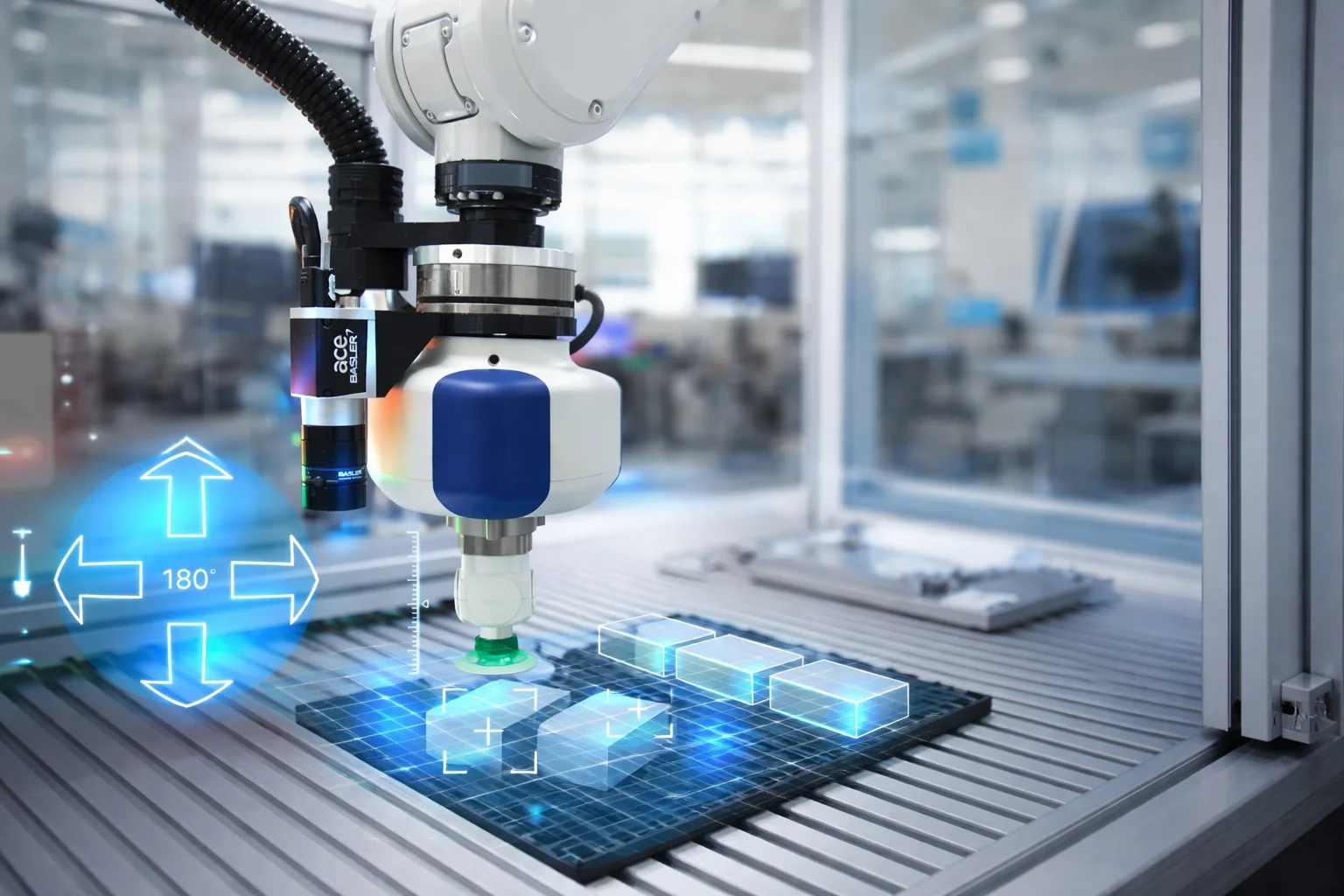
Robotics is the field of designing, building, programming, and operating robots. A robot is a machine that can perform physical actions through a combination of mechanical parts, sensors, control systems, and software.
Some robots follow simple instructions. Others use cameras and sensors to understand their surroundings. Advanced robots may use AI to identify objects, plan movements, or adapt to changing conditions.
A robot usually includes several important components.
Mechanical Structure
The mechanical structure gives a robot its physical shape. It may include wheels, arms, joints, grippers, legs, or other moving parts.
The design depends on the robot’s purpose. An industrial robot arm needs different parts from a small robot designed to clean a floor.
Sensors
Sensors collect information about the environment. They may measure distance, pressure, temperature, movement, light, or position.
This information helps the robot understand where it is and how it should respond.
Control System
The control system coordinates the robot’s actions. It processes instructions and uses sensor information to guide movement.
A control system may be simple or highly advanced, depending on the task.
Software and Artificial Intelligence
Software tells a robot how to perform its assigned work. AI can add capabilities such as image recognition, object detection, and decision support.
Not every robot requires AI. Many industrial robots perform their tasks effectively through carefully programmed movements and precise control systems.
What Is Automation?
Automation uses technology to perform tasks with reduced human involvement. It can include software, sensors, conveyor belts, industrial machinery, and connected control systems.
For example, an automated production line can move products between workstations. Software can record measurements and alert workers when a machine needs attention.
Automation does not always involve robots. A system that sends invoices automatically is a form of automation, even though it does not use a physical machine.
Robotics and automation often work together. A robot may pick up a component while an automated system controls the conveyor belt, checks product quality, and records production data.
For more technology insights and digital industry topics, visit sosoactivehub.org
Major Types of Robots
Different robots are designed for different environments and responsibilities.
1. Industrial Robots
Industrial robots are commonly used in manufacturing. They can weld metal, paint surfaces, assemble components, package goods, and move heavy objects.
Their main strengths include repeatability, speed, and the ability to perform demanding tasks over long periods.
Factories often place industrial robots inside protected work areas. Safety systems help prevent people from entering dangerous zones while machines are operating.
2. Collaborative Robots
Collaborative robots, often called cobots, are designed to work near people under suitable safety conditions.
They may help employees lift components, position parts, or perform repeated assembly tasks. Some cobots are easier to program than traditional industrial robots.
However, the word collaborative does not mean that every cobot is automatically safe in every situation. Risk assessments, suitable tools, and correct installation remain essential.
3. Service Robots
Service robots perform tasks outside traditional industrial production. They may clean floors, deliver supplies, guide visitors, or assist with routine work.
Hotels, airports, hospitals, and commercial buildings may use service robots for specific tasks.
Their usefulness depends on the environment. A robot that works well in an open corridor may struggle in a crowded area with unexpected obstacles.
4. Medical Robots
Medical robots can support surgeons, rehabilitation teams, and healthcare workers. Some systems help surgeons control specialized instruments during procedures.
Other robotic devices assist with rehabilitation exercises or support the movement of medical supplies.
Medical robots do not independently replace the knowledge and judgment of healthcare professionals. Their use requires training, careful monitoring, and appropriate clinical standards.
5. Agricultural Robots
Agricultural robots can support planting, weeding, crop monitoring, harvesting, and livestock management.
Sensors and imaging systems may help identify areas that need water or attention. Automated equipment can also help farmers monitor large fields more efficiently.
Agricultural robots must handle changing weather, uneven ground, dust, and other challenging conditions.
6. Autonomous Mobile Robots
Autonomous mobile robots move through environments with limited direct control. They may use sensors, maps, and software to navigate warehouses, factories, or delivery areas.
These robots can transport materials between locations. They may also communicate with warehouse management systems to receive tasks.
Reliable navigation is especially important in busy environments where people and machines share space.
How Robotics Is Changing Manufacturing
Manufacturing is one of the most established areas for robotics and automation.
Faster Production
Robots can perform repeated movements at a consistent pace. This helps manufacturers increase output when production demand is high.
However, a robot’s speed is only one part of the production process. Material supply, quality checks, machine maintenance, and packaging must also work efficiently.
Better Product Consistency
Robots can repeat programmed movements with high precision. This is useful for welding, painting, cutting, and assembling products.
Consistent movements can reduce variation, but the final quality still depends on equipment condition, material quality, and correct programming.
Improved Worker Safety
Some manufacturing tasks involve heavy lifting, extreme temperatures, hazardous substances, or repetitive movements. Robots can take over certain dangerous activities and reduce worker exposure.
Businesses must still train workers to operate and maintain automated equipment safely.
More Flexible Production
Modern robotic systems can sometimes switch between different products by changing programs, tools, or settings.
This flexibility helps manufacturers respond to changing demand. It can also make smaller production runs more practical.
Robotics in Healthcare
Healthcare organizations face complex demands, including patient care, equipment management, and rehabilitation.
Robotic systems can help with selected tasks, but they must meet strict safety and performance requirements.
Surgical Assistance
Some robotic surgical systems allow trained surgeons to control instruments through a specialized interface. Depending on the system and procedure, this may provide improved instrument control or visualization.
The results depend on the procedure, clinical team, and technology used. Robotic assistance is not automatically better for every patient or operation.
Rehabilitation
Rehabilitation robots can support repeated movements during recovery. They may help patients practice walking, moving a limb, or completing specific exercises under professional supervision.
These systems can provide consistent support, while therapists continue to evaluate progress and adjust treatment.
Hospital Logistics
Mobile robots may transport supplies, equipment, meals, or other items through suitable hospital areas.
This can reduce some routine transport work for staff. Hospitals must carefully plan routes, cleaning procedures, and interactions with patients.
Robotics in Warehouses and Logistics
Online shopping and rapid delivery have increased the need for efficient warehouse operations.
Robots can move containers, carry packages, sort products, and support inventory handling. Automated systems can also direct workers toward the correct shelves.
A warehouse may combine mobile robots, conveyor belts, barcode scanners, and inventory software. Together, these systems help coordinate the movement of goods.
However, automation needs accurate stock information and reliable equipment. Poor planning can create bottlenecks instead of solving them.
The Role of Artificial Intelligence in Robotics
AI can help robots respond to situations that are difficult to describe using fixed instructions alone.
Computer vision, for example, can help a robot identify objects in a camera image. Machine learning can support pattern recognition, while planning software can help a robot select a route.
AI-powered robots may be useful in warehouses, agriculture, inspection, and selected service environments.
Yet AI also introduces challenges. A robot may misidentify an object, fail to recognize an unusual obstacle, or respond poorly to an unfamiliar situation.
For this reason, businesses should test robotic systems under realistic conditions and define situations where the machine must stop or request human assistance.
Benefits of Robotics and Automation
Robotics and automation can provide several advantages.
- Higher productivity: Machines can perform suitable tasks at a consistent pace.
- Improved repeatability: Programmed actions can reduce unwanted variation.
- Worker safety: Robots can handle certain hazardous or physically demanding tasks.
- Better resource use: Automated systems can help reduce wasted time and materials.
- Operational consistency: Connected equipment can follow standard processes.
- Continuous operation: Some systems can operate for long periods with planned maintenance.
- More data: Sensors can provide useful information about equipment performance and production quality.
These benefits are not guaranteed. Companies must evaluate the cost, complexity, and suitability of each system.
Challenges and Risks
High Initial Investment
Robots may require equipment purchases, installation, programming, safety systems, and employee training.
Smaller companies should compare these costs with realistic productivity gains and ongoing maintenance expenses.
Maintenance Requirements
Robots contain mechanical and electronic components that can wear out or fail. Regular inspection and maintenance help reduce unexpected downtime.
Workforce Changes
Automation can change job responsibilities and reduce demand for some repetitive tasks. It can also create demand for technicians, programmers, safety specialists, and equipment operators.
Businesses should support employees through training and clear communication when work processes change.
Safety Concerns
Robots can cause injuries if they are installed incorrectly or used outside their intended conditions.
Companies need risk assessments, protective measures, emergency stops, and appropriate training. Safety should be considered before installation, not after an accident.
Cybersecurity
Connected robots may communicate with business networks and cloud systems. Weak security can expose equipment or operational data to unauthorized access.
Companies should control system permissions, update software, monitor network activity, and separate critical equipment from unnecessary network access where appropriate.
How Businesses Can Adopt Robotics
Companies should begin with a clear operational problem rather than buying robots simply because the technology is popular.
First, identify tasks that are repetitive, dangerous, physically demanding, or difficult to perform consistently. Next, evaluate whether robotics is the best solution.
A pilot project can help test performance before a large investment. Businesses should measure productivity, quality, safety, maintenance needs, and the total cost of ownership.
Employees should receive training before the system becomes part of normal operations. Companies should also plan for equipment failures and establish clear responsibilities for maintenance.
The Future of Robotics
Robotics is likely to become more capable as sensors, batteries, AI, and computing systems improve.
Future systems may handle a wider variety of objects, navigate more complex environments, and cooperate more effectively with human workers. Robots may also become easier for smaller businesses to configure for specific tasks.
Progress will still depend on reliability, cost, safety, and practical performance. A robot that works well in a demonstration may need additional development before it can operate reliably in a real workplace SosoActiveHub.
Conclusion
Robotics and automation are helping industries improve production, manage physical tasks, and support workers. They are already useful in manufacturing, healthcare, agriculture, warehouses, and service environments.
However, successful implementation requires more than purchasing equipment. Businesses need proper planning, safety measures, training, maintenance, and realistic performance targets.
The strongest results come when robots handle suitable tasks and people provide supervision, problem-solving, and informed decisions.


Who Is Elisa Larregui? The Real Life Story of Aries Spears’ Former Wife

Who Is Solita Liliana Rivera? The Real Life Story of Geraldo Rivera’s Youngest Daughter

Who Is Alyssa Cuban? The Real Life Story of Mark Cuban’s Middle Daughter

Who Is Andrea Skeete? The Real Life Story of George Foreman’s Fourth Wife

Who Is Juanita Katt? The Real Life Story of Barbara Hale’s Daughter

Who Is Asher Sky Waite? The Real Life Story of Natasha Henstridge’s Younger Son

Who Is Thomas Emil Sicks? The Inspiring Life of Kiefer Sutherland’s Half-Brother

Who Is Aidan Thieriot? The Inspiring Life of Max Thieriot’s Brother

Who Is Michel Sáenz Castro? The Fascinating Life of Verónica Castro’s Son

Who Is Amelia Jane Henson? The Fascinating Life of Mia Sara and Brian Henson’s Daughter

Who Is Paris Brosnan? The Remarkable Life of Pierce Brosnan’s Son

Who Is América Guinart? A Remarkable Life of Alejandro Fernández’s Ex-Wife
-
 Celebrity2 months ago
Who Is Thomas Emil Sicks? The Inspiring Life of Kiefer Sutherland’s Half-Brother
-
 Celebrity2 months ago
Who Is Aidan Thieriot? The Inspiring Life of Max Thieriot’s Brother
-
 Celebrity3 months ago
Who Is Michel Sáenz Castro? The Fascinating Life of Verónica Castro’s Son
-
 Celebrity2 months ago
Who Is Amelia Jane Henson? The Fascinating Life of Mia Sara and Brian Henson’s Daughter
-
 Celebrity2 months ago
Who Is Paris Brosnan? The Remarkable Life of Pierce Brosnan’s Son
-
 Celebrity2 months ago
Who Is América Guinart? A Remarkable Life of Alejandro Fernández’s Ex-Wife
-

 Celebrity3 months ago
Who Is James Daniel Sundquist? The Extraordinary Life of Jimi Hendrix’s Son
-

 Business2 months ago
What Is LessInvest.com and How Does the Platform Work?