Travel
Delta Connection DL3543 Emergency Landing: What Is Confirmed

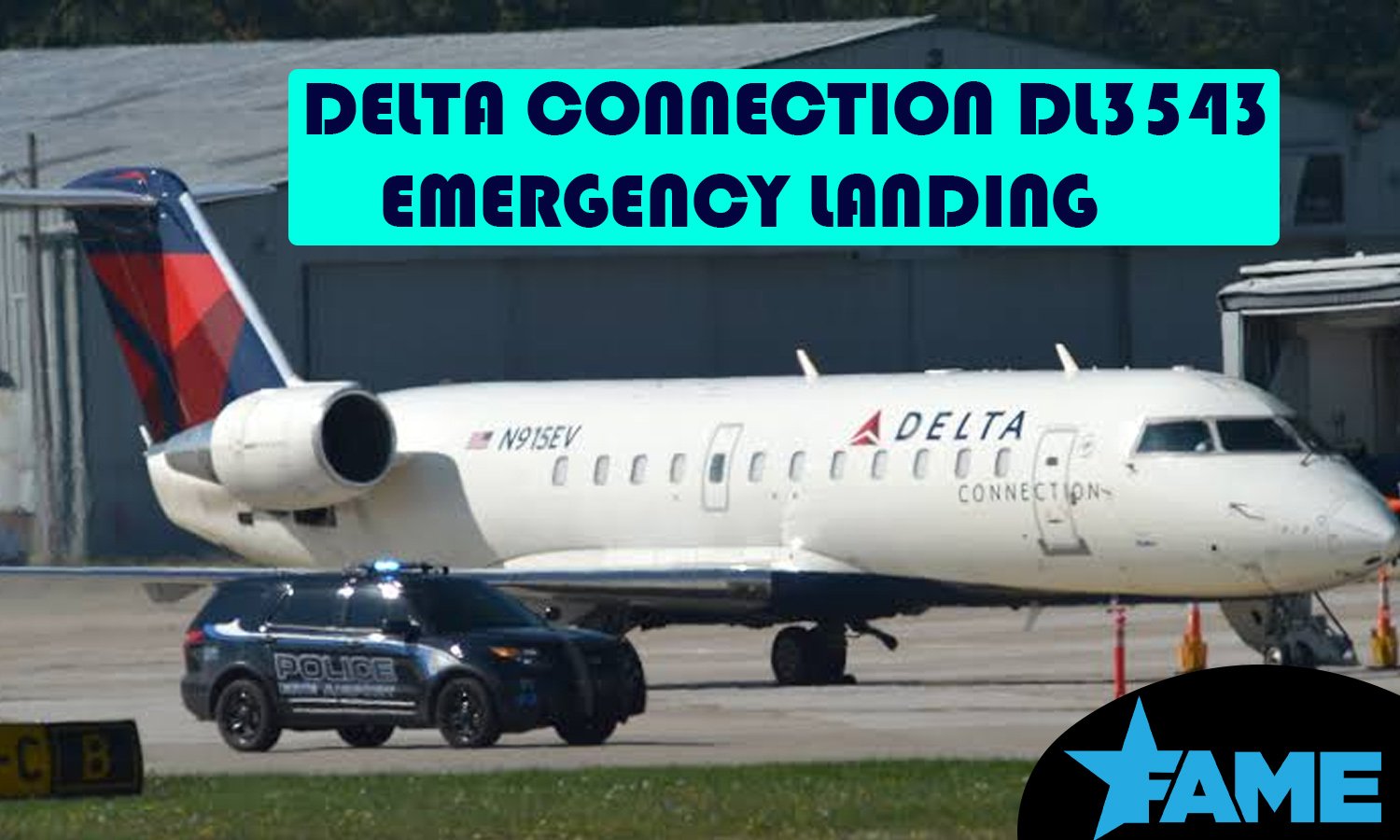
The Delta Connection DL3543 emergency landing refers to a flight that declared an emergency and returned to Minneapolis-Saint Paul International Airport in early July 2025, an event first reported by aviation flight-tracking outlet AIRLIVE. Since this incident, numerous websites have published articles describing the event with varying and sometimes inconsistent details about the specific route and diversion airport, making it important to separate the confirmed facts from unverified secondhand claims. This guide explains what has actually been confirmed about the DL3543 emergency, what a Delta Connection flight designation means, and how to evaluate the many articles now circulating about this incident.
What Is Confirmed About the DL3543 Emergency?
What is confirmed about the DL3543 emergency is that AIRLIVE, an established flight-tracking and aviation news outlet, reported around July 7, 2025, that Delta Connection flight DL3543 declared an emergency and was returning to Minneapolis-Saint Paul International Airport. This kind of declaration is a standard aviation safety procedure that flight crews use to alert air traffic control to a situation requiring priority handling, and AIRLIVE’s specific, timestamped report of the emergency declaration and intended return airport represents the most directly sourced confirmation available for this specific incident.
Beyond this core confirmed detail, the specific underlying cause of the emergency declaration, along with any information about injuries or the precise final outcome of the flight, has not been confirmed through an official airline statement or aviation authority report that this guide can independently verify, which is an important distinction to keep in mind when evaluating other accounts of this incident.
What Does “Delta Connection” Mean?
Delta Connection is the branding Delta Air Lines uses for flights operated on its behalf by regional airline partners under contract, rather than by Delta’s own mainline fleet and flight crews, typically using smaller regional jet aircraft on routes connecting smaller markets to Delta’s larger hub airports. This kind of branded regional partnership arrangement is common across major U.S. airlines, allowing the mainline carrier to offer service on routes and with aircraft sizes that would not be efficient for its own larger mainline fleet to operate directly.
Understanding this distinction matters for interpreting any Delta Connection flight incident, since the flight is operated by a specific regional partner airline under Delta’s branding and marketing, even though passengers book and experience the flight as part of the broader Delta Air Lines network and loyalty program.
Why Did Flight DL3543 Declare an Emergency?
Why flight DL3543 declared an emergency has not been confirmed through an official statement from Delta, the operating regional carrier, or an aviation safety authority that this guide can independently verify, despite AIRLIVE’s confirmed report of the emergency declaration and return to Minneapolis itself. Flight crews declare emergencies for a range of possible reasons, including mechanical or technical issues, onboard medical situations, or other operational concerns that call for priority handling and expedited clearance from air traffic control, but attributing a specific cause to this particular flight without a confirmed source would not be an accurate representation of what is actually known.
Readers encountering articles that state a specific, detailed cause for this emergency without citing an identifiable, credible source should treat those specific causal claims with appropriate skepticism, since the confirmed reporting on this incident does not include a verified explanation for the emergency declaration itself.
Why Do Multiple Websites Describe This Incident Differently?
Multiple websites describe this incident differently, with some describing the flight as Boston-bound and others describing a Minneapolis-to-Chicago route diverting to Midway International Airport, because a significant volume of content covering this keyword appears to have been generated without direct access to or citation of an original, verified source, instead compiling and sometimes altering details from other secondary articles covering the same event. This kind of inconsistency across multiple sources describing the same specific incident, particularly when the inconsistencies involve basic factual details like the flight’s route or diversion airport, is a recognizable warning sign of content that was not independently verified against primary source information.
Readers researching this specific incident should treat the confirmed core detail, an emergency declaration and return to Minneapolis as reported by AIRLIVE, as the most reliable starting point, while approaching any additional specific route or outcome details found only on secondary websites with appropriate caution given these documented inconsistencies.
How Common Are In-Flight Emergency Declarations?
In-flight emergency declarations are a relatively routine part of aviation safety procedure, occurring with some regularity across the commercial aviation industry as flight crews use this formal declaration to ensure they receive priority handling and any necessary support from air traffic control and ground emergency services when facing a situation that could develop into a more serious problem. Declaring an emergency does not necessarily mean a catastrophic or life-threatening situation has occurred, since flight crews are trained to declare emergencies proactively for a wide range of situations, from confirmed mechanical problems to precautionary responses to warning indicators, specifically to ensure they have all necessary resources and priority available if the situation were to become more serious.
This routine, precautionary nature of many emergency declarations is an important context for understanding aviation incidents generally, since a flight that declares an emergency and lands safely, as appears to be the case with DL3543 given the confirmed return to Minneapolis, does not necessarily indicate the kind of severe incident that some more sensationalized secondary coverage might imply.
What Should You Do If You Were a Passenger on This Flight?
If you were a passenger on this flight, contacting Delta Air Lines directly through its customer service channels is the most reliable way to get specific information about your particular flight experience, any compensation or accommodation you may be entitled to, and confirmed details about what actually happened during your specific journey. Airlines maintain specific incident records and customer service processes for handling passenger inquiries related to flight disruptions, emergencies, or diversions, making this a more reliable information source than secondary online articles that may not have direct access to the airline’s own incident documentation.
This approach, going directly to the airline for passenger-specific information rather than relying on general online articles about the broader incident, applies to any flight disruption a passenger may have personally experienced, since only the airline itself has access to the specific passenger manifest and incident details relevant to an individual traveler’s experience.
How Can You Evaluate Aviation Incident Reports You Find Online?
You can evaluate aviation incident reports you find online by checking whether the article cites a specific, identifiable, and credible source such as an established aviation news outlet, flight-tracking service, or official airline and aviation authority statement, rather than presenting specific factual claims without any clear sourcing. Cross-referencing key details, such as the flight’s route, aircraft type, and outcome, across multiple independently reported sources can help identify inconsistencies that suggest a particular account may not be fully accurate or may have been generated without direct verification against original source material.
This kind of careful sourcing evaluation is particularly important for aviation safety incidents specifically, given how quickly inaccurate or embellished details can spread across multiple websites covering the same underlying event, as appears to have happened with the DL3543 incident given the route and airport inconsistencies found across the available coverage.
What Is AIRLIVE and Why Does Its Reporting Matter Here?
AIRLIVE is an aviation news and flight-tracking outlet that monitors and reports on live flight activity, including emergency declarations, diversions, and other notable aviation events as they are detected through flight tracking data and aviation communication monitoring. Its specific, timestamped report of the DL3543 emergency declaration and return to Minneapolis represents a more directly sourced account than the numerous secondary articles that appear to have been published afterward without similarly direct access to flight tracking or aviation communication data.
This distinction between a primary aviation tracking source and secondary content built around that original report is a useful framework for evaluating any aviation incident that generates a similar wave of follow-up online coverage, helping readers identify which specific claims about an incident have a traceable, credible original source.
Why Do Aviation Incidents Attract This Kind of Content Farm Coverage?
Aviation incidents attract this kind of content farm coverage because flight emergencies and diversions generate significant public search interest, particularly when the flight number and airline are specific and searchable, creating an incentive for websites focused on generating search traffic to quickly publish articles on the topic regardless of whether they have access to verified, original source information. This pattern is not unique to the DL3543 incident, and similar clusters of quickly published, loosely sourced articles tend to appear around any aviation event that generates public attention and search volume, from emergency landings to diversions to other notable flight incidents.
Recognizing this broader pattern helps explain why a search for almost any specific flight number involved in a publicized incident tends to surface numerous similarly structured articles covering the same event, often with only minor variations in wording and, as seen here, sometimes with factual inconsistencies that suggest limited or no direct verification against the original source reporting.
What Is the Practical Takeaway About the DL3543 Emergency?
The practical takeaway about the DL3543 emergency is that the confirmed facts are limited to an emergency declaration and a return to Minneapolis-Saint Paul International Airport, as reported by AIRLIVE around July 7, 2025, while the specific cause of the emergency and various route details reported elsewhere have not been independently confirmed and, in some cases, conflict with each other across different secondary sources. Readers should treat the AIRLIVE report as the most reliable available source for this specific incident and approach additional unsourced claims about the flight’s cause or specific route with appropriate skepticism.
Conclusion
The Delta Connection DL3543 emergency landing refers to a flight that declared an emergency and returned to Minneapolis-Saint Paul International Airport in early July 2025, as reported by aviation outlet AIRLIVE, though the specific cause of the emergency has not been independently confirmed. Numerous secondary websites have since published articles about this incident with inconsistent route and outcome details, underscoring the importance of tracing claims back to a credible, directly sourced report rather than relying on secondary coverage alone. Passengers with specific questions about this flight should contact Delta Air Lines directly for confirmed, individualized information.
Frequently Asked Questions
What is confirmed about the DL3543 emergency?
AIRLIVE reported that Delta Connection flight DL3543 declared an emergency and returned to Minneapolis-Saint Paul around July 7, 2025.
What caused the DL3543 emergency declaration?
The specific cause has not been confirmed through an official airline or aviation authority statement that can be independently verified.
Why do different websites describe this incident differently?
Many secondary articles appear to have been generated without direct sourcing, leading to inconsistent details about the flight’s route and diversion airport.
Is declaring an in-flight emergency always a serious event?
Not necessarily. Crews often declare emergencies as a precaution to secure priority handling, even for situations that do not become severe.
What should I do if I was on this flight?
Contact Delta Air Lines directly for confirmed, passenger-specific information about the incident and any applicable accommodation.


Who Was Sandra Janowski? The Real Life Story of Ted Nugent’s First Wife

Who Is Peter Buchignani? The Real Life Story of Carley Shimkus’s Husband

Who Is Rishia Haas? The Real Life Story of Andrew Zimmern’s Ex-Wife

Who Is Elaine Starchuk? The Real Life Story of Tommy Lee’s First Wife

Who Is Margie Washichek? The Real Life Story of Jimmy Buffett’s First Wife

Who Is Shelly Tresvant? The Real Life Story of Ralph Tresvant’s First Wife

Who Is Thomas Emil Sicks? The Inspiring Life of Kiefer Sutherland’s Half-Brother

Who Is Aidan Thieriot? The Inspiring Life of Max Thieriot’s Brother

Who Is Michel Sáenz Castro? The Fascinating Life of Verónica Castro’s Son

Who Is Amelia Jane Henson? The Fascinating Life of Mia Sara and Brian Henson’s Daughter

Who Is América Guinart? A Remarkable Life of Alejandro Fernández’s Ex-Wife

Who Is Paris Brosnan? The Remarkable Life of Pierce Brosnan’s Son
-
 Celebrity2 months ago
Who Is Thomas Emil Sicks? The Inspiring Life of Kiefer Sutherland’s Half-Brother
-
 Celebrity2 months ago
Who Is Aidan Thieriot? The Inspiring Life of Max Thieriot’s Brother
-
 Celebrity2 months ago
Who Is Michel Sáenz Castro? The Fascinating Life of Verónica Castro’s Son
-
 Celebrity2 months ago
Who Is Amelia Jane Henson? The Fascinating Life of Mia Sara and Brian Henson’s Daughter
-
 Celebrity2 months ago
Who Is América Guinart? A Remarkable Life of Alejandro Fernández’s Ex-Wife
-
 Celebrity2 months ago
Who Is Paris Brosnan? The Remarkable Life of Pierce Brosnan’s Son
-

 Celebrity2 months ago
Who Is James Daniel Sundquist? The Extraordinary Life of Jimi Hendrix’s Son
-

 Celebrity2 months ago
Who Is London Bierk? The Real Life Story of Sebastian Bach’s Son