Blog
Air France A350 Chicago Flight Return: What Happened to AF136

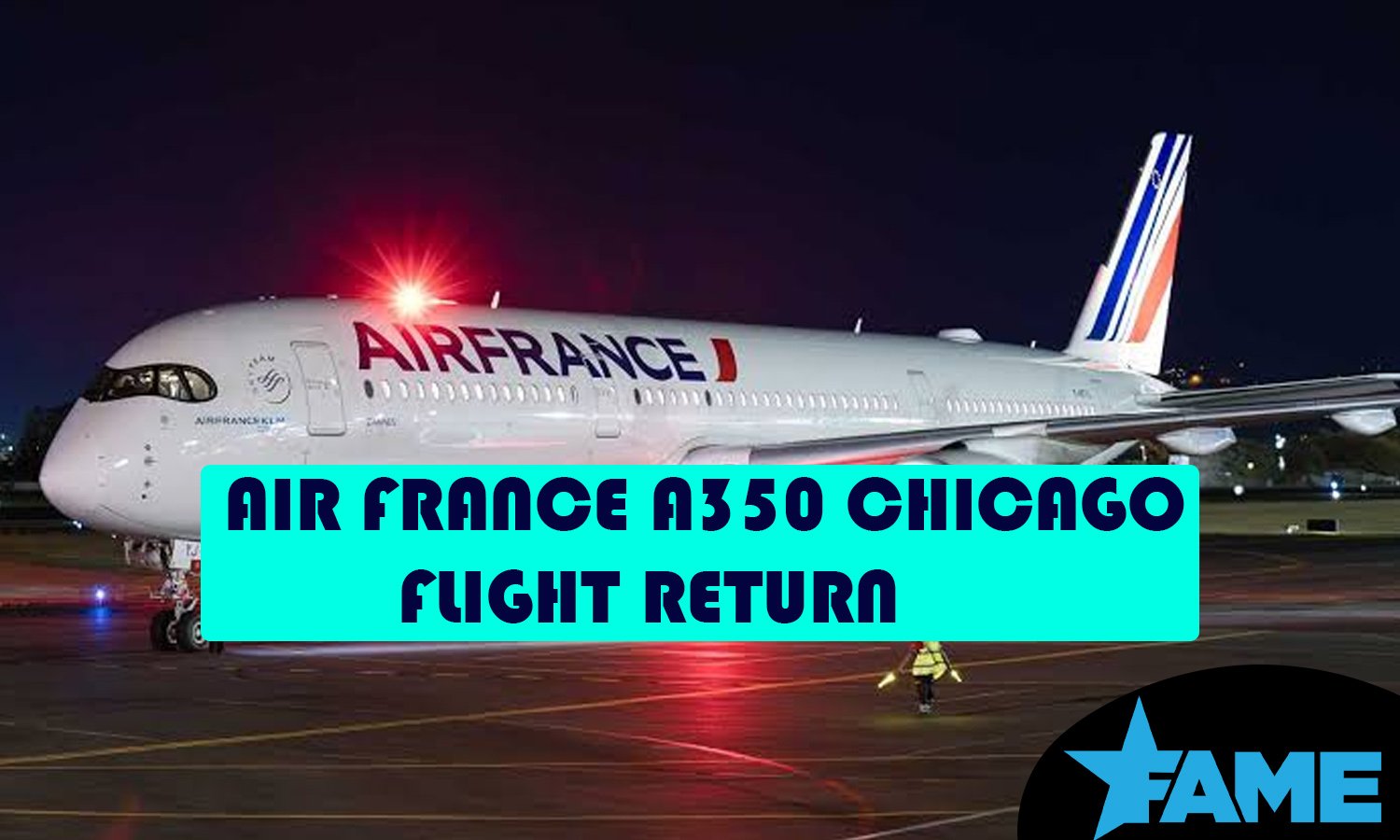
The Air France A350 Chicago flight return refers to flight AF136, an Airbus A350-941 that departed Paris-Charles de Gaulle Airport for Chicago O’Hare International Airport on June 28, 2025, only to turn back and land in Paris after spending roughly six hours and thirty-seven minutes in the air. The airline cited operational reasons for the reversal, while at least one passenger reported being told the aircraft was not given authorization to land in Chicago. This guide explains the confirmed facts of the incident, what happened to the affected passengers, and why this kind of long-haul flight reversal occurs.
What Happened on Air France Flight AF136?
Air France flight AF136 departed Paris-Charles de Gaulle Airport at 12:49 CEST on June 28, 2025, bound for Chicago O’Hare International Airport, but reversed course over the Atlantic Ocean and returned to Paris instead of continuing to its scheduled destination. The aircraft, an Airbus A350-941 registered as F-HUVR, spent approximately six hours and thirty-seven minutes in flight before landing back in Paris, meaning it had traveled a substantial distance toward Chicago before the decision was made to turn around rather than continue.
This kind of mid-ocean reversal on a long-haul transatlantic route is a significant operational event, since it means the aircraft burned substantial fuel flying most of the way toward its destination before returning to the departure airport rather than continuing to Chicago or diverting to a closer alternate airport.
Why Did Flight AF136 Turn Around?
Flight AF136 turned around because Air France cited operational reasons for the decision, though the airline’s public statement did not specify the precise nature of the issue that prevented the flight from continuing to Chicago. At least one passenger on board reported being told that the flight had not been given authorization to land in Chicago, a detail consistent with reports that the aircraft encountered some kind of air traffic control or clearance-related obstacle rather than a mechanical or safety issue with the aircraft itself.
Since Air France’s own public explanation used the general term “operational reasons” rather than confirming the specific clearance issue passengers described, the precise underlying cause of the reversal has not been independently confirmed through an official, detailed airline or aviation authority statement beyond these two accounts.
What Aircraft Was Involved in the Chicago Flight Return?
The aircraft involved in the Chicago flight return was an Airbus A350-941, a long-range, twin-engine widebody aircraft that Air France operates on many of its long-haul international routes, registered with the tail number F-HUVR. The A350 is one of the newer widebody aircraft types in Air France’s fleet, generally used for the airline’s longer transatlantic and intercontinental routes given its range capability and fuel efficiency compared to older widebody aircraft designs.
Using this type of long-range aircraft for the Paris to Chicago route reflects the substantial distance covered on this specific transatlantic route, which is also why the aircraft’s roughly six-and-a-half-hour flight before turning back represented such a significant portion of the total planned journey time.
How Long Was Flight AF136 in the Air Before Returning?
Flight AF136 was in the air for approximately six hours and thirty-seven minutes before landing back in Paris, a duration that suggests the aircraft had flown most or all of the way across the Atlantic Ocean toward Chicago before the decision was made to reverse course rather than continue to the original destination or divert to a nearer alternate airport. This extended flight time before the reversal is notable because it indicates whatever issue caused the turnaround was not identified or resolved early in the flight, when a return to the departure airport would have involved a much shorter overall flight time.
A flight that reverses course after nearly reaching its destination airspace, rather than turning back shortly after takeoff, typically reflects a situation where the obstacle to continuing, such as a clearance or authorization issue, only became apparent or was only communicated to the flight crew later in the journey.
What Happened to Passengers on the Diverted Flight?
Passengers on the diverted flight received accommodation from Air France and were rebooked onto a subsequent Air France flight, AF4080, which departed the following day at 14:20 CEST. This kind of rebooking and accommodation response is standard airline practice when a flight cannot complete its original journey and passengers need to wait for the next available flight to reach their intended destination.
The roughly one-day delay between the original flight’s return to Paris and the rebooked flight’s departure reflects the practical reality that transatlantic flights are not always available on short notice, requiring affected passengers to wait for the next scheduled departure with available capacity to complete their journey to Chicago.
Is This Kind of Mid-Flight Reversal Common?
Mid-flight reversals of this kind, where an aircraft turns back to its departure airport after flying a substantial distance toward its destination, are relatively uncommon but do occur periodically due to a range of operational, weather, mechanical, or air traffic control factors that can arise during a long-haul flight. Airlines generally prefer to continue to the destination or divert to a closer alternate airport when possible, since returning to the original departure point after covering most of the distance to the destination is generally less efficient than other alternatives, making a full return to the departure city a notable rather than routine outcome.
The specific combination of factors in this case, an extended flight time before the reversal and a stated clearance or authorization issue at the destination, represents a somewhat unusual scenario compared to more common reasons for flight diversions, such as onboard medical emergencies or mechanical issues that typically prompt a diversion to the nearest suitable airport rather than a full return to the departure city.
Why Do Airlines Cite General Terms Like “Operational Reasons”?
Airlines often cite general terms like “operational reasons” in public statements about flight disruptions because providing more specific details can involve information the airline considers sensitive, still under internal review, or subject to air traffic control and regulatory considerations that are not immediately fully known even to the airline itself shortly after an incident occurs. This kind of general public statement is common across the airline industry for various types of flight disruptions, reflecting a cautious approach to public communication before all relevant facts have been fully confirmed and reviewed internally.
This pattern of general public statements combined with more specific passenger accounts, as seen in this case with the reported clearance and authorization issue, is a recurring feature of how flight disruption incidents become publicly understood, often relying on passenger reports and flight tracking data alongside the airline’s own more limited public statements.
How Was This Flight Return Tracked and Reported?
This flight return was tracked and reported through flight tracking services that documented the aircraft’s actual flight path, altitude, and timing data showing the reversal over the Atlantic Ocean, providing independent, verifiable evidence of the flight’s actual movements beyond the airline’s own statement. Aviation news outlets and flight tracking communities specifically monitor this kind of flight data, allowing for independent confirmation of the flight’s actual behavior, including the specific duration in the air and the point at which it reversed course, separate from any public relations statement issued by the airline itself.
This kind of independent flight tracking verification is valuable for confirming the basic facts of an aviation incident like this one, even when the airline’s own explanation for the underlying cause remains somewhat general or incomplete compared to the specific passenger accounts that have also circulated regarding the reported clearance issue.
What Should Travelers Know About Long-Haul Flight Disruptions Like This?
Travelers should know that long-haul flight disruptions like the AF136 reversal, while relatively uncommon, can occur due to a range of operational factors, and airlines generally do provide accommodation and rebooking for passengers affected by this kind of significant delay or diversion. Understanding that airlines have standard procedures for handling these situations, including rebooking onto the next available flight and providing accommodation when an overnight delay results, can help travelers know what to reasonably expect if they experience a similar disruption on their own journey.
Checking with the airline directly for the most current and specific information about any disruption affecting a booked flight, rather than relying solely on secondhand reports or general online commentary, remains the most reliable way to get accurate, up-to-date information about a specific travel disruption as it unfolds.
How Does This Incident Compare to Other Transatlantic Flight Disruptions?
This incident compares to other transatlantic flight disruptions in that clearance and authorization issues at the destination airport, while less frequently discussed than mechanical problems or medical emergencies, represent a distinct category of disruption tied to air traffic control coordination and regulatory clearance processes rather than the aircraft’s own mechanical condition or onboard events. Transatlantic routes involve coordination between air traffic control authorities across multiple countries and airspace jurisdictions, and any breakdown or delay in that coordination process, whether related to slot availability, documentation, or other authorization requirements, can in principle affect whether a flight is cleared to land at its scheduled destination airport as planned.
Compared to a mechanical issue, which typically becomes apparent to the flight crew through aircraft systems monitoring, or a medical emergency, which is immediately apparent to cabin crew, a clearance or authorization issue may not become fully apparent until later in the flight when the aircraft is closer to its destination and preparing for the arrival and landing sequence, which is consistent with the extended flight time recorded before this particular flight’s reversal.
What Role Does Flight Tracking Data Play in Verifying Incidents Like This?
Flight tracking data plays an important role in verifying incidents like this because it provides an independently recorded, timestamped account of an aircraft’s actual position, altitude, and flight path that exists separately from any statement issued by the airline or any secondhand passenger account shared afterward. Services that record this kind of flight path data allow aviation enthusiasts, journalists, and researchers to confirm basic facts, such as exactly when and where a flight reversed course and how long it remained airborne before landing, without needing to rely solely on official statements that may use general language rather than specific technical detail.
This kind of independent verification capability is particularly valuable for aviation incidents that attract public attention and generate secondhand reporting across multiple websites and publications, since it allows readers to distinguish between the confirmed, trackable facts of a flight’s actual movements and any additional claims or speculation about the underlying cause that may circulate without similar independent confirmation.
Conclusion
The Air France A350 Chicago flight return refers to flight AF136, which departed Paris for Chicago on June 28, 2025, but turned back after roughly six and a half hours over the Atlantic due to what Air France described as operational reasons, with passenger accounts pointing to a landing authorization issue at Chicago O’Hare. Affected passengers received accommodation and were rebooked onto a flight departing the next day. While relatively uncommon, this kind of long-haul flight reversal reflects the range of operational factors that can occasionally disrupt even well-established transatlantic routes.
Frequently Asked Questions
What flight was involved in the Air France Chicago flight return?
Flight AF136, an Airbus A350-941 registered F-HUVR, which departed Paris for Chicago on June 28, 2025, before turning back.
Why did the flight return to Paris?
Air France cited operational reasons, while a passenger reported being told the flight was not authorized to land in Chicago.
How long was the flight in the air before returning?
The aircraft was in flight for approximately six hours and thirty-seven minutes before landing back in Paris.
What happened to passengers on the flight?
Passengers received accommodation from Air France and were rebooked onto flight AF4080, departing the following day at 14:20 CEST.
Is this type of flight reversal common?
No, reversing course after flying most of the way to a destination is relatively uncommon compared to diverting to a nearer airport.


Who Was Sandra Janowski? The Real Life Story of Ted Nugent’s First Wife

Who Is Peter Buchignani? The Real Life Story of Carley Shimkus’s Husband

Who Is Rishia Haas? The Real Life Story of Andrew Zimmern’s Ex-Wife

Who Is Elaine Starchuk? The Real Life Story of Tommy Lee’s First Wife

Who Is Margie Washichek? The Real Life Story of Jimmy Buffett’s First Wife

Who Is Shelly Tresvant? The Real Life Story of Ralph Tresvant’s First Wife

Who Is Thomas Emil Sicks? The Inspiring Life of Kiefer Sutherland’s Half-Brother

Who Is Aidan Thieriot? The Inspiring Life of Max Thieriot’s Brother

Who Is Michel Sáenz Castro? The Fascinating Life of Verónica Castro’s Son

Who Is Amelia Jane Henson? The Fascinating Life of Mia Sara and Brian Henson’s Daughter

Who Is América Guinart? A Remarkable Life of Alejandro Fernández’s Ex-Wife

Who Is Paris Brosnan? The Remarkable Life of Pierce Brosnan’s Son
-
 Celebrity2 months ago
Who Is Thomas Emil Sicks? The Inspiring Life of Kiefer Sutherland’s Half-Brother
-
 Celebrity2 months ago
Who Is Aidan Thieriot? The Inspiring Life of Max Thieriot’s Brother
-
 Celebrity2 months ago
Who Is Michel Sáenz Castro? The Fascinating Life of Verónica Castro’s Son
-
 Celebrity2 months ago
Who Is Amelia Jane Henson? The Fascinating Life of Mia Sara and Brian Henson’s Daughter
-
 Celebrity2 months ago
Who Is América Guinart? A Remarkable Life of Alejandro Fernández’s Ex-Wife
-
 Celebrity2 months ago
Who Is Paris Brosnan? The Remarkable Life of Pierce Brosnan’s Son
-

 Celebrity2 months ago
Who Is James Daniel Sundquist? The Extraordinary Life of Jimi Hendrix’s Son
-

 Celebrity2 months ago
Who Is London Bierk? The Real Life Story of Sebastian Bach’s Son